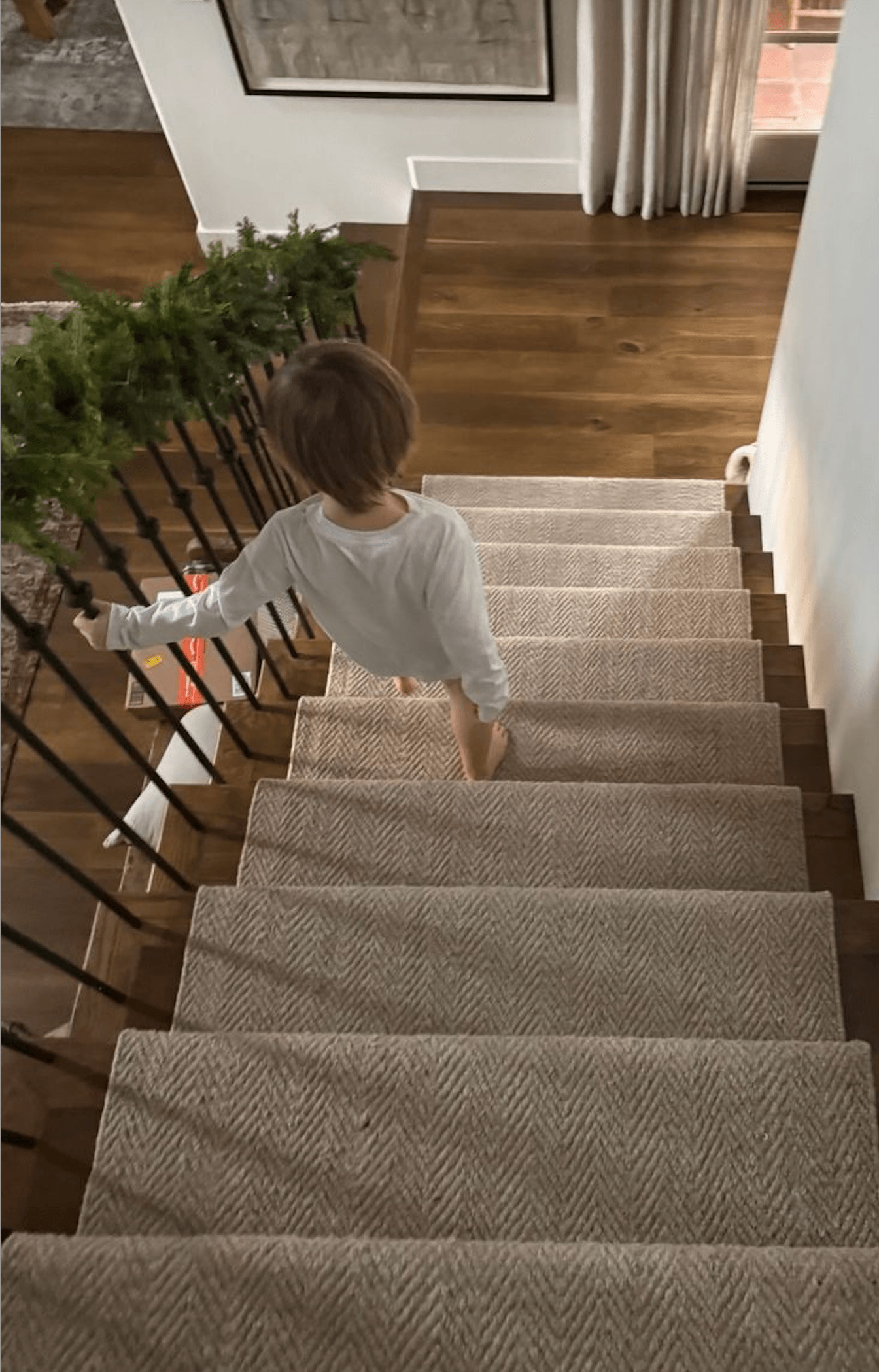
Carpeted staircase with herringbone runner, black iron railing, hardwood floors, and child walking down stairs in modern home interior
How to Design Stairs to Prevent Falls and Injuries: Safety-Focused Tips from Professional Designers
Stairs are one of the most common places where accidents happen at home or in commercial buildings. In fact, stair-related falls account for over a million injuries every year, making stair safety a critical consideration in architectural design. Whether you’re building a home, renovating a commercial space, or simply upgrading your staircase, understanding how to design stairs to prevent falls can save lives and minimize liability.
In this blog post, we’ll break down key principles of stair safety, share expert tips, and explain why hiring an experienced stair designer is your best bet for peace of mind. We’ll also link to useful resources and provide a comprehensive checklist to help you make safer stairs a priority.
Why Stair Safety Matters
Falls on stairs are not just inconvenient—they can be life-changing. Seniors, children, and individuals with mobility issues are especially vulnerable. However, anyone can trip, slip, or misstep due to poorly designed stairs.
According to the National Safety Council, more than 12,000 deaths per year occur due to stair falls in the United States alone. These accidents can often be traced back to avoidable design flaws, such as inconsistent riser heights, poor lighting, and slippery surfaces.
Core Principles of Safe Stair Design
1. Maintain Consistent Riser Height and Tread Depth
The number one rule in stair design is consistency. Inconsistent riser heights are disorienting and dangerous. According to the International Residential Code (IRC):
Riser height should be a maximum of 7.75 inches.
Tread depth must be at least 10 inches.
Tip: Even a ¼-inch difference in riser height can cause a trip hazard. Always ensure uniformity across all steps.
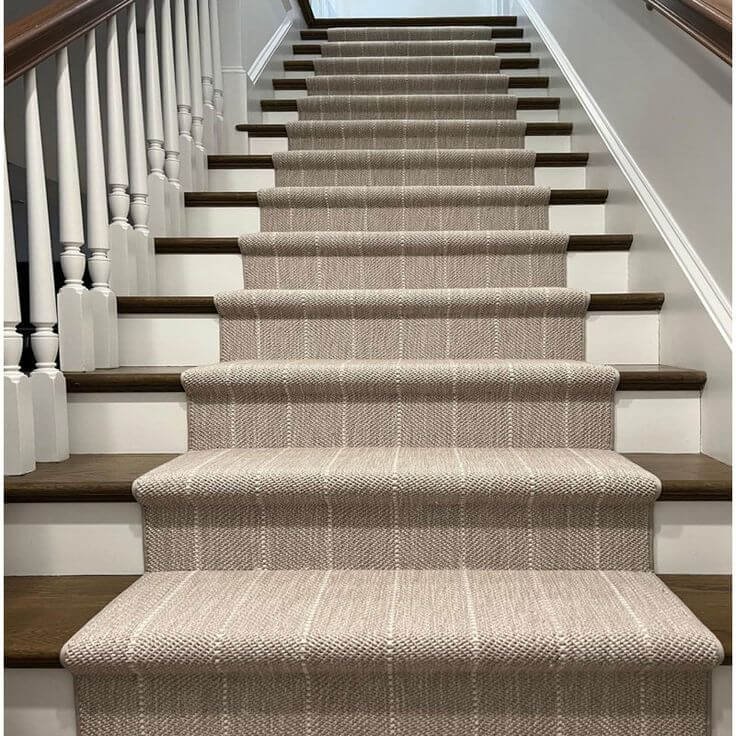
Traditional staircase with white spindles, dark wood treads, and beige plaid carpet runner in classic home interior
2. Add Visual Contrast
Stairs with visually distinct treads and nosings reduce fall risk, especially for the elderly or visually impaired. Use materials and colors that contrast:
Add colored nosing strips.
Use contrasting tiles or stair carpets.
Avoid glossy finishes that reflect light and create glare.
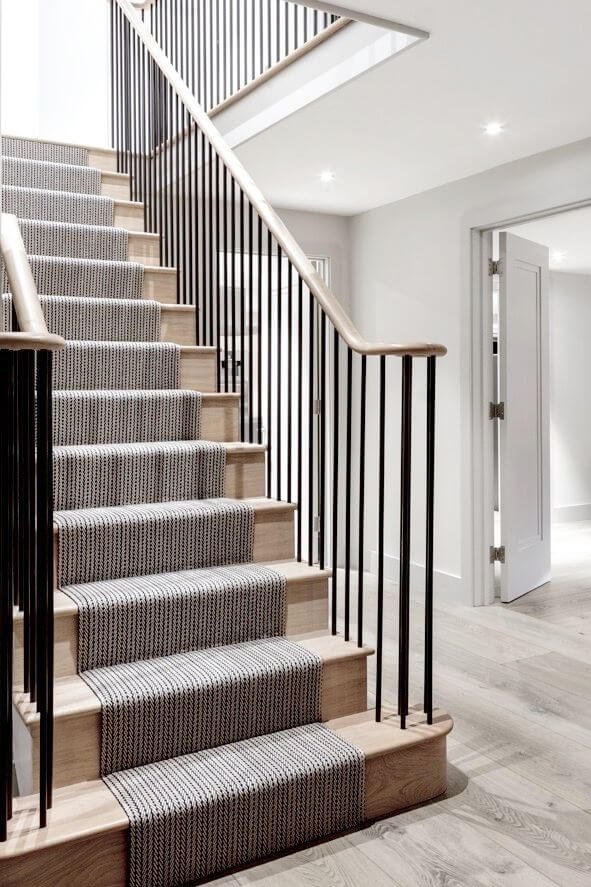
Modern staircase with light wood steps, black metal balusters, and black-and-white striped stair runner in open contemporary hallway
Product Recommendation: Non-Slip Stair Tread Nosing
3. Install Handrails on Both Sides
A handrail is your first line of defense if you lose balance. To optimize safety:
Handrails should be between 34-38 inches above the stair nosing.
Ensure a secure grip size of 1.25 to 2 inches in diameter.
Extend handrails beyond the top and bottom steps for extra support.
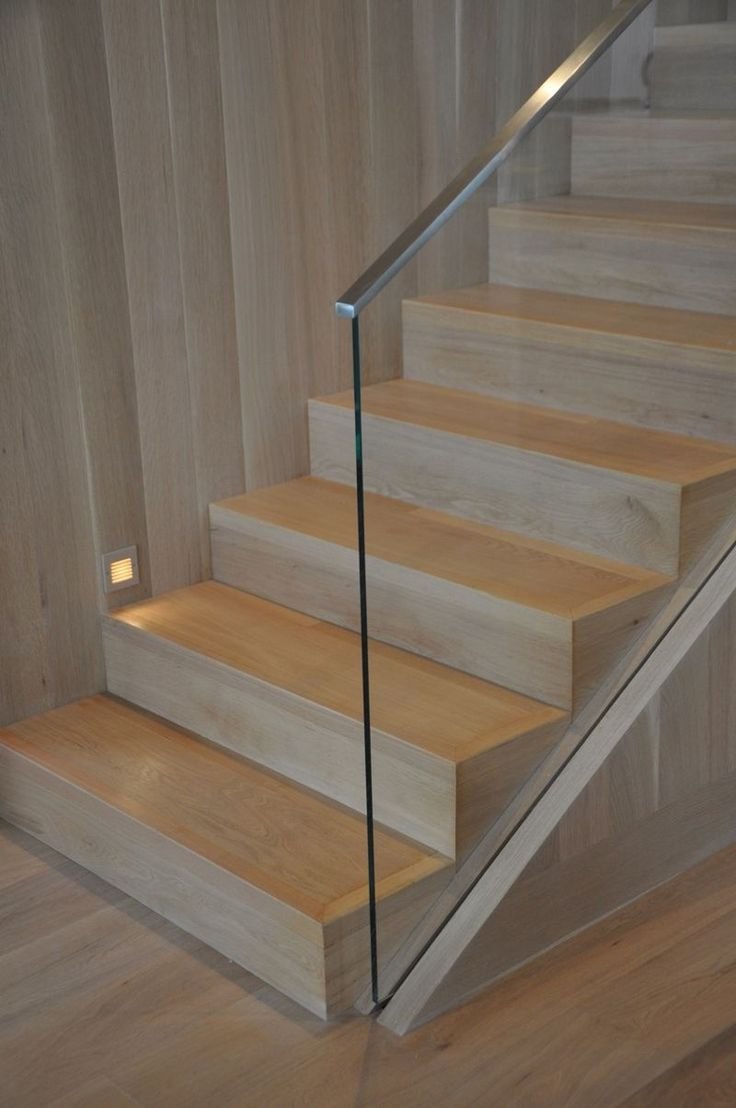
Minimalist staircase with light oak floating steps, glass railing, and modern wood-paneled wall design
Check out ADA handrail guidelines here.
4. Provide Adequate Lighting
Poor lighting is a leading cause of stair accidents. Always:
Install motion-sensor LED lights.
Include wall sconces or overhead lighting in dim stairwells.
Highlight the first and last steps clearly.
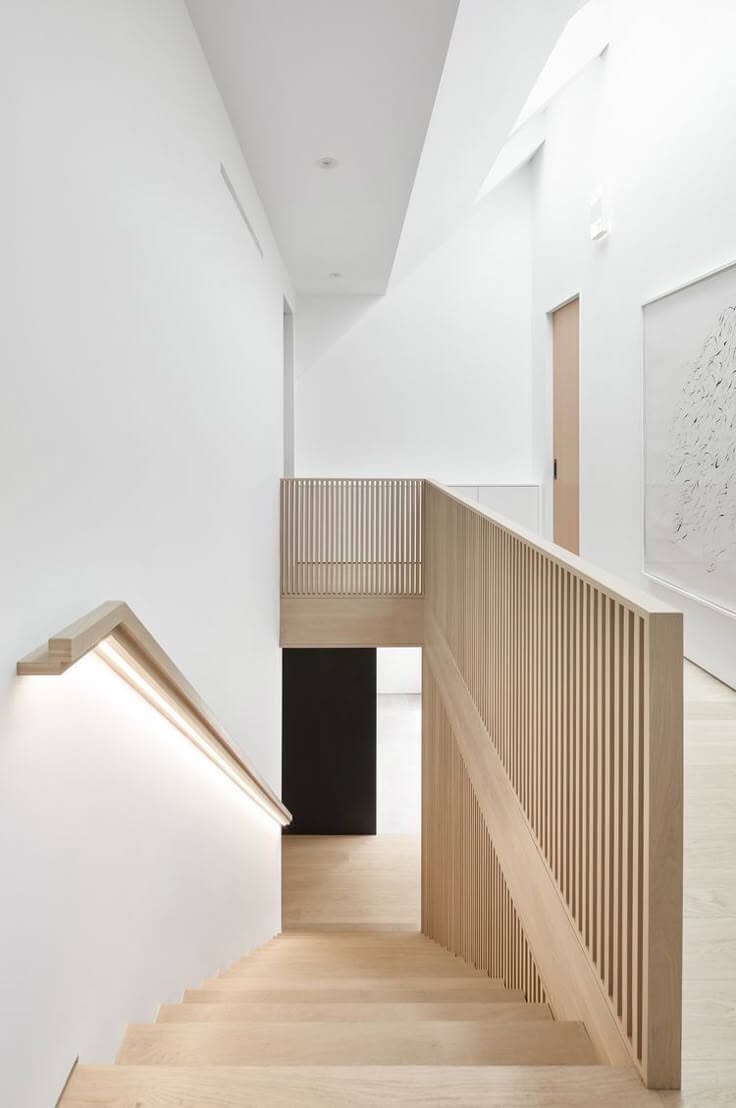
Scandinavian-inspired staircase with vertical wood slat railing, natural wood steps, and clean white walls in bright hallway
5. Use Non-Slip Materials
Choose stair materials that offer traction, especially in areas prone to moisture. Consider:
Textured wood or concrete
Non-slip stair treads or carpet runners
Anti-slip coatings
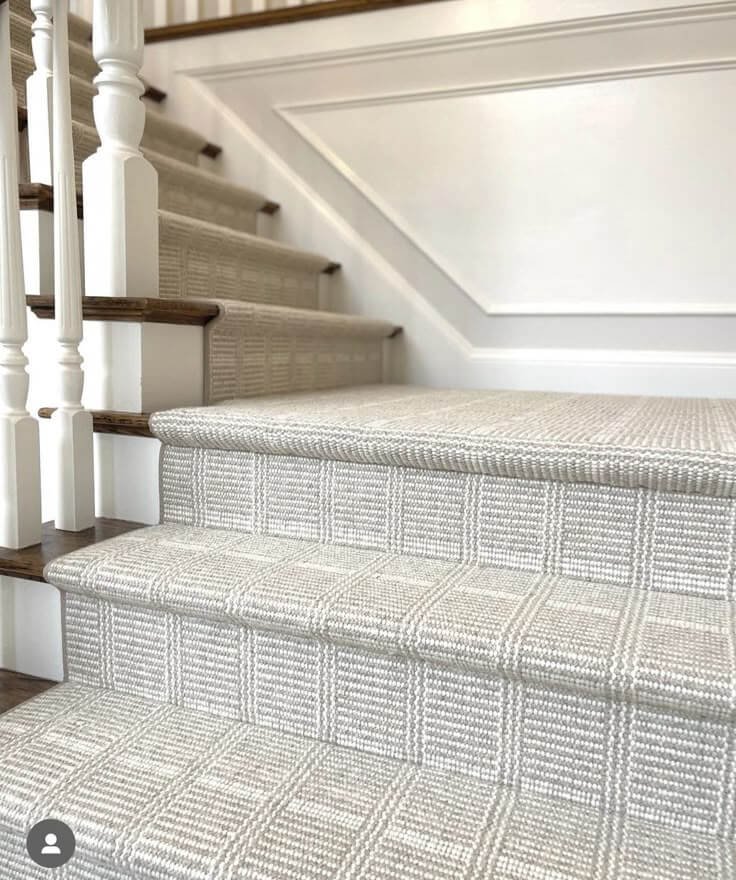
Elegant staircase with beige geometric-patterned stair runner, white balusters, and dark wood accents in luxury home design
Helpful Resource: Consumer Reports Stair Safety Guide
6. Avoid Open Risers
Open risers (stairs without backs) can be stylish, but they’re unsafe, especially for children and older adults. For maximum safety:
Enclose risers.
If using open risers, the opening should not allow a 4-inch sphere to pass through (as per IRC).
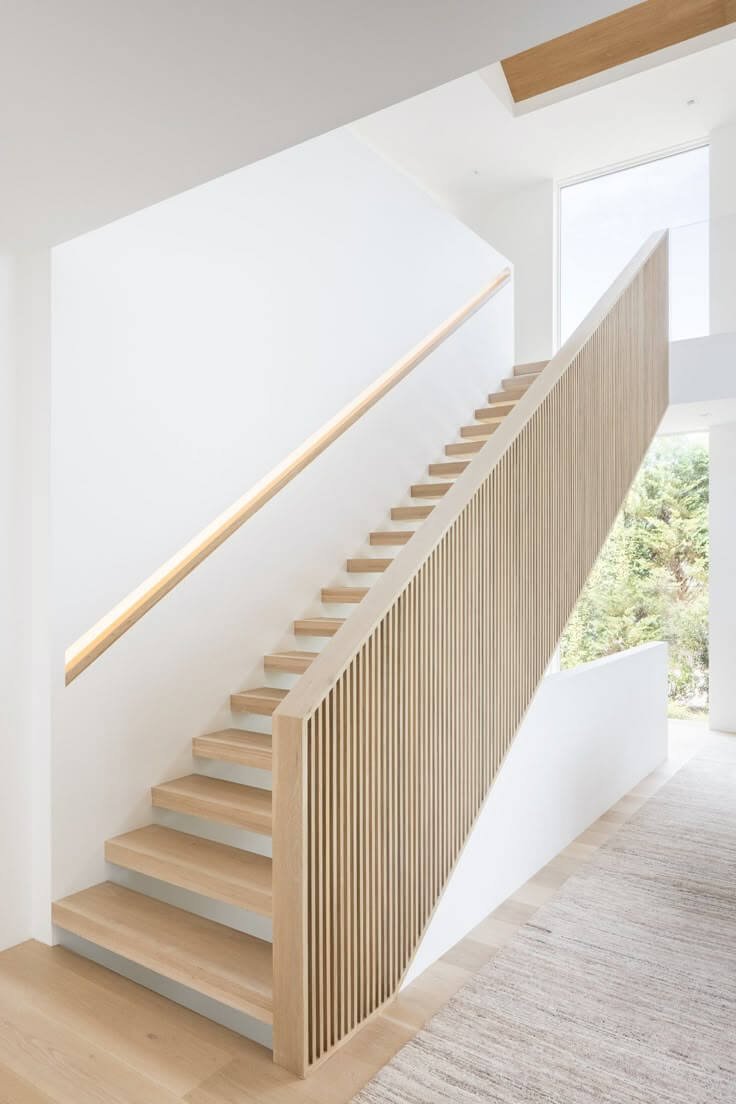
Minimalist floating staircase with vertical wood slat railing, natural light wood treads, and sleek white walls in modern architectural home
Design Elements That Can Reduce Stair Falls
Proper Landing Spaces
Landings provide rest and safety zones in long staircases. Ideally:
A landing should be at least as wide as the stair and 36 inches deep.
Include landings after every 12-14 steps or at each floor level.
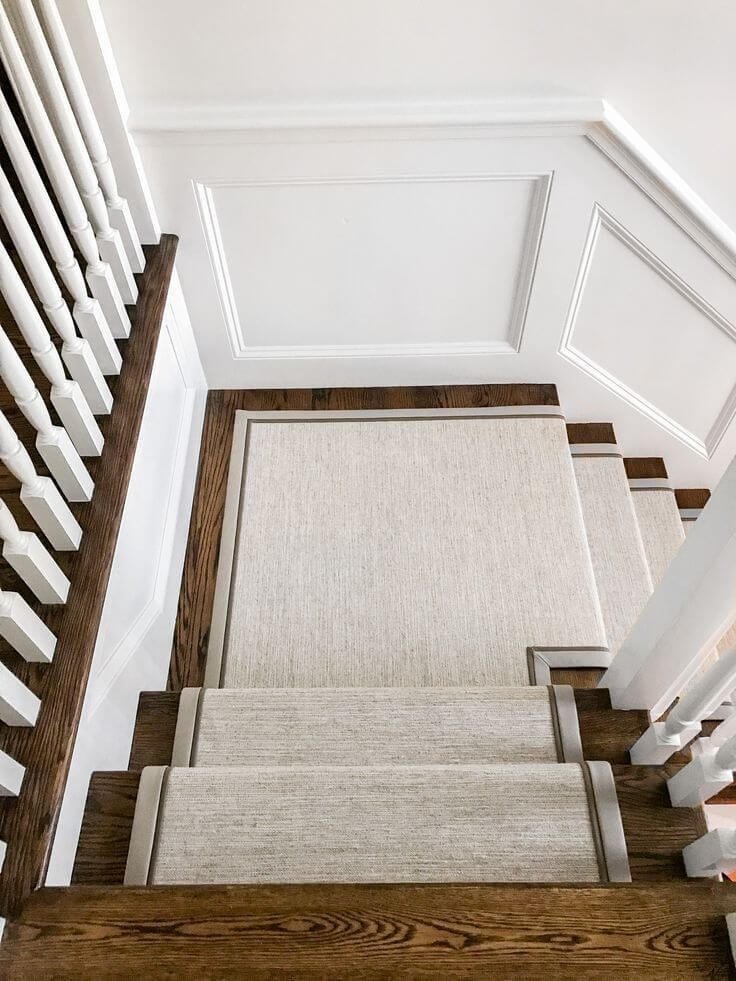
Traditional staircase with light neutral stair runner, dark wood treads, white spindles, and wainscoting wall paneling
Rounded vs. Sharp Edges
Sharp stair nosings increase injury severity during a fall. Use rounded edges or bullnose profiles for safer landings.
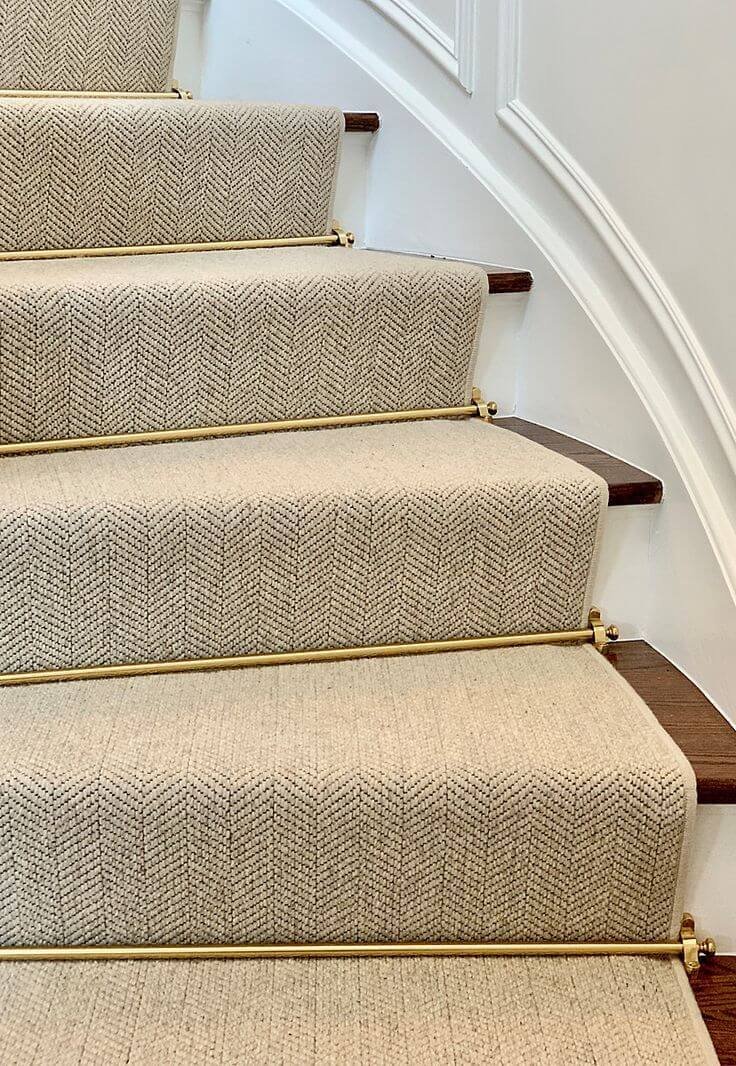
Elegant curved staircase with herringbone stair runner and brass stair rods on dark wood steps in classic home interior
Carpet vs. Wood vs. Tile
Each material offers pros and cons:
Carpet: Softens falls but can wear out and cause tripping.
Wood: Durable but slippery unless textured.
Tile: Attractive but dangerous unless non-slip.
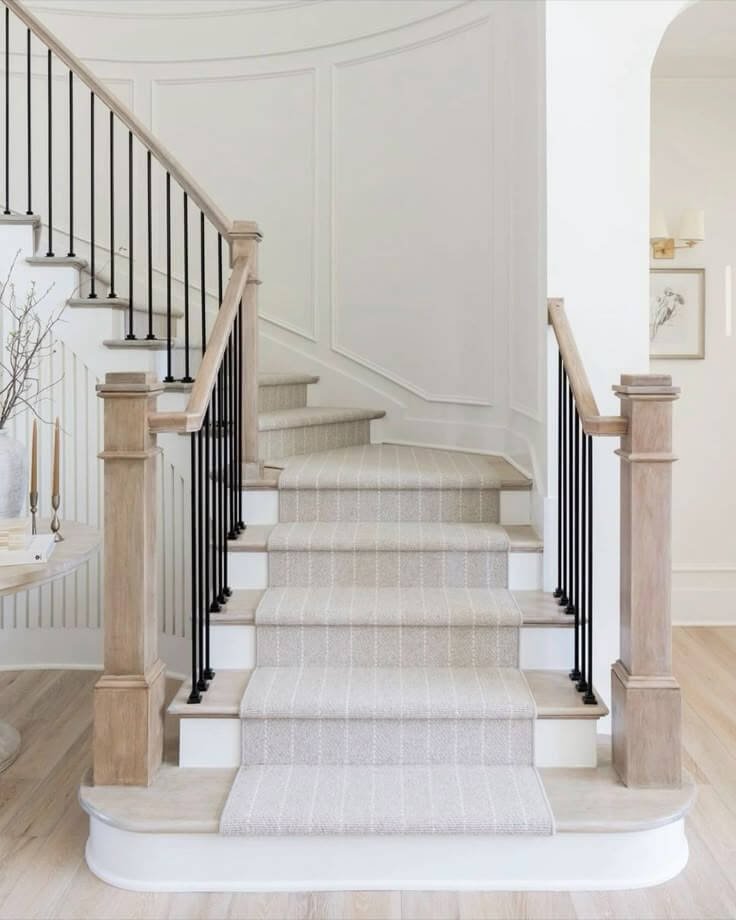
Grand entry staircase with light wood banisters, white risers, black spindles, and striped stair runner in transitional home design
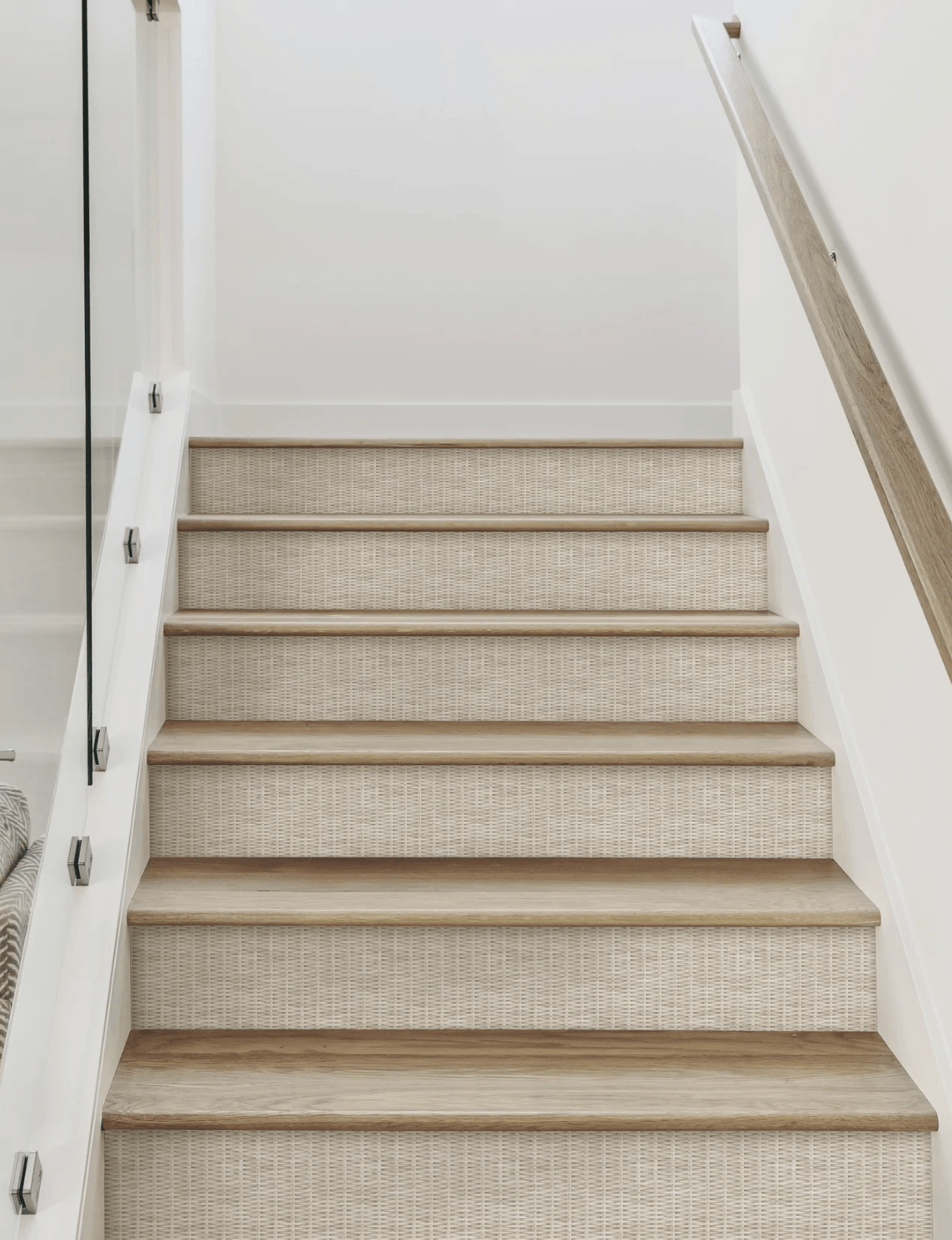
Contemporary staircase with light wood stair treads and woven texture risers, paired with glass and wood railing for modern beach house style
Use rubber stair treads or textured vinyl in high-traffic commercial spaces for best safety.
Hiring a Professional Stair Designer: Why It Matters
While DIY stair design might seem like a cost-saving strategy, it’s often a false economy. A single misstep in measurement or material choice can lead to dangerous outcomes.
Benefits of Working with a Professional:
Expertise in building codes and safety standards
Precision in design to ensure consistency
Aesthetic design without compromising safety
Customized solutions for unique architecture
Looking for a trusted stair design expert? Contact a certified professional stair designer through NKBA or Houzz.
Common Mistakes to Avoid
Uneven riser height
Slippery or glossy surfaces
Poor lighting or dark corners
No or poorly installed handrails
Inadequate tread depth
No visual edge indicators
Recommendation
Riser Height - Uniform; ≤ 7.75”
Tread Depth -≥ 10”
Handrails - Both sides; 34-38” high
Lighting - Motion-sensor, stair-edge lights
Surface - Non-slip material, high-traction
Visibility - Contrasting nosings
Risers - Closed or <4” gap
Landings - ≥ 36” depth
Edge Profile - Rounded/bullnose preferred
Checklist: Safe Stair Design At-A-Glance
Smart Tech: Future of Stair Safety
Modern technology can further enhance stair safety:
LED Edge Lighting: Adds visibility without glare.
Smart Handrails: With pressure sensors to detect falls.
Fall Detection Systems: Wearables or home sensors linked to emergency services.
Learn more about smart home safety tools here.
Case Study: A Safe and Stylish Staircase Remodel
In a recent project in Seattle, a professional designer was brought in to remodel a 1980s-style staircase in a home with senior residents. They:
Replaced open risers with enclosed backs
Installed dual handrails
Added motion-activated stair lights
Used slip-resistant oak treads with rubber nosing
Incorporated visual contrast using two-tone paint
Don’t Risk It — Consult a Stair Design Professional Today!
If you’re building or remodeling a staircase, the safest decision you can make is to consult a professional designer. Their expertise goes beyond aesthetics — they understand codes, ergonomics, and how to prevent accidents before they happen.
Ensure your stairs are safe for everyone in your home or building.
Avoid costly medical bills, legal liability, or heartache.
Conclusion
Stair safety is not just a design choice — it’s a lifesaving decision. With the right planning, materials, and professional help, you can create a stairway that is not only beautiful but also safe for everyone.
By following the principles above, using safe materials, installing proper lighting, and most importantly, working with an experienced designer, you dramatically reduce the risk of injury.
Ready to Elevate Your Office?
Whether you’re a CEO, founder, or simply someone ready to invest in a space that matches your ambition, Interior Designs by Tiffany is here to make your vision real. From concept to completion, our team is dedicated to crafting one-of-a-kind interiors that inspire greatness every day.
Interior Designs By Tiffany: Ahead of the Trends, Always
At Interior Designs By Tiffany, we don’t just follow design trends — we translate them into timeless spaces tailored to you. Whether you’re drawn to sustainable modernism, biophilic luxury, or bold artistic statements, we help you bring your vision to life with sophistication, functionality, and intention.
Our team offers:
Full-service residential and commercial design
Remodels and new builds
Wellness and sustainable design packages
Custom furniture and art sourcing
Space planning and styling
Bring Your Vision to Life
At Interior Designs By Tiffany, we believe a beautifully designed home should reflect the people who live in it. With over 20 years of experience creating thoughtfully tailored interiors!
Email us at. Interior Designs By Tiffany@gmail.com
Visit us at www.InteriorDesignsByTiffany.com
BOOK AN IN PERSON DESIGN CONSULTATION
“Serving Newport Beach, California, and all of Orange County—plus clients nationwide.”
